
⚡ Quick summary
Need to fly heavy equipment fast? Boeing 747-8F and Antonov An-124 handle oversized cargo through nose doors and rear ramps. Boeing 777F delivers the best fuel efficiency for dense bulk freight. Boeing 767-300F works for regional shipments under 52 tons. Ilyushin Il-76 operates from unpaved runways in remote locations.
Charter costs: $50,000-$400,000+ per flight depending on aircraft and distance. Companies choose air over sea when factory downtime costs $100,000/day or construction penalties exceed flight costs.
Key decision factors: Cargo dimensions determine door type needed (side doors handle under 3 meters, nose loaders or rear ramps required for 3-10+ meters). Floor strength limits vary by aircraft (An-124 handles 1,200 kg/m² vs 750 kg/m² for standard freighters). Range affects refueling stops (777F flies 9,000 km vs 4,800 km for An-124).
Bottom line: Match your cargo's weight, dimensions, and destination to the right aircraft. Get it wrong and your shipment sits grounded while you pay for delays.
Introduction
Moving heavy cargo by air sounds expensive. And it is. But sometimes you don't have a choice.
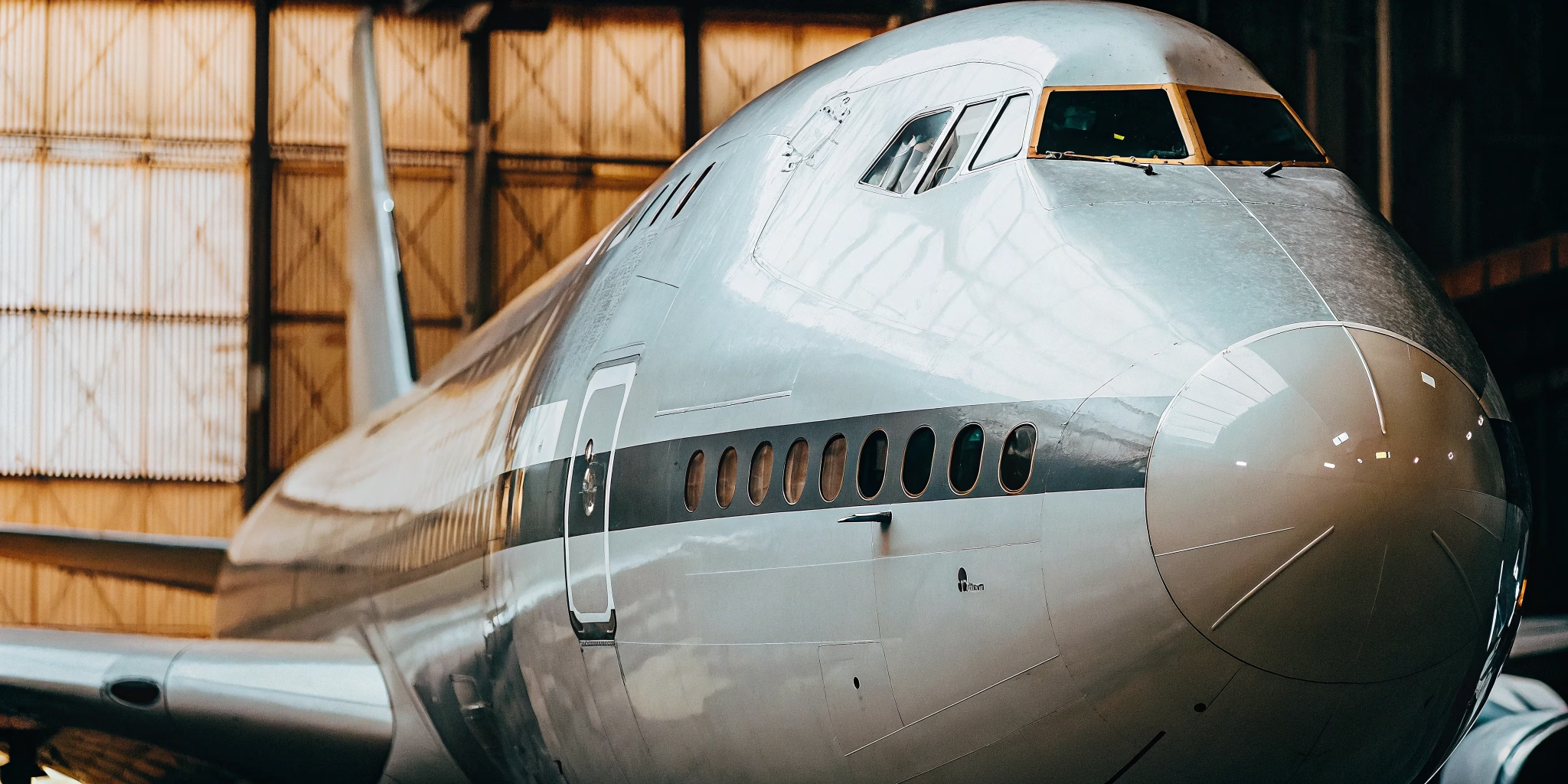
When a mining company needs replacement equipment flown to the Katanga region, DR Congo, or when construction gear has to reach Lagos, Nigeria, before a project deadline, ocean freight just won't work. You need a plane. A big one.
The problem is figuring out which plane works best for your specific cargo. A 20-ton turbine needs different handling than palletized industrial parts. Oversized machinery requires nose-loading capability. Time-sensitive shipments might justify higher costs for faster aircraft.
This guide breaks down the best cargo aircraft models for moving bulk commodities. You'll learn which planes handle heavy loads, which ones work for oversized equipment, and what to consider when choosing between charter flights and scheduled freight services.
What are bulk commodities in air freight?
Air freight usually means boxes on pallets or mail bags. Small stuff moving fast. But bulk commodities are different. These are huge, heavy shipments that don't fit in standard containers. We're talking about equipment that weighs 15 tons or machinery the size of a small car.
Regular air cargo gets loaded into those metal containers you see being wheeled into planes. Bulk commodities can't work that way. The equipment is too big, too heavy, or shaped wrong for standard containers.
A turbine blade measuring 12 meters long won't fit in a container. Neither will a mining vehicle or pre-fabricated building sections. These shipments need direct loading into the aircraft cargo hold.
Common bulk commodities transported by air
Mining & energy equipment
When an oil rig breaks down in the Gulf of Guinea, replacement parts fly in. Drilling components, turbines, and specialized tools often weigh 5 to 15 tons each. Solar panel installations in remote areas and wind turbine parts for offshore farms move the same way when construction schedules can't slip.
Industrial machinery & components
Production lines don't stop politely and wait for shipping. When a machine fails, factories need replacements now. Manufacturing robots, injection molding equipment, printing press components. A single machine might weigh 8 tons and measure 4 meters long. The longer it sits in transit, the more money the factory loses.
Agricultural products (high-value/urgent)
Most agriculture moves by ship or truck. But certain products justify air costs. Live animals for breeding programs fly in specialized cargo holds. Flower varieties travel from Kenya to Europe overnight to arrive fresh. Rare seeds and biotech materials that need precise climate control. During food crises, even grain and dried goods sometimes reach disaster zones by air.
Construction materials
Try trucking steel beams to the remote deserts of Sudan in winter or shipping glass panels to Mauritius. Some locations make air freight the only realistic option. Pre-fabricated building components, specialized steel beams, high-rise glass panels, and modular units all move by air when geography demands it.
Humanitarian & relief cargo
Disasters destroy roads. Ports flood. Airports usually recover first. Relief organizations fly in medical supplies, water purification equipment, tents, blankets, and food. Speed beats everything else. Cargo planes land, crews unload in hours, and the plane leaves to make room for the next delivery.
Why these commodities fly instead of ship
Ocean freight costs less. A lot less. You might pay $5,000 to ship 20 tons of equipment by sea versus $150,000 to fly it. So why do companies choose air?
Time-critical replacements
A factory loses $100,000 per day while waiting for a broken machine to get replaced. Flying the part in for $150,000 saves money compared to three weeks of lost production. The math is simple when downtime costs more than the flight.
Remote locations
Some destinations don't have ports or reliable roads. Mining sites in the remote deserts of Sudan, construction projects on Mauritius, oil fields in the Niger Delta. Air freight might be the only way to get equipment there within a reasonable timeframe.
Emergency situations
Disasters damage infrastructure. Roads wash out. Ports close. But airports can operate with minimal facilities. A cargo plane can land on a damaged runway that wouldn't handle ship traffic for weeks.
Project penalties
Construction contracts often include penalty clauses for missing deadlines. If late delivery of steel beams costs $200,000 in penalties, paying $150,000 to fly them in makes business sense.
Key requirements for bulk cargo aircraft
Not every cargo plane works for bulk commodities. Choosing the right aircraft means matching your shipment's specific requirements to what each model actually delivers. Here's what matters when you're comparing options.
Payload capacity & floor strength
Check usable capacity, not just maximum specs
A Boeing 747-8F lists a maximum payload of 134 tons. Sounds great until you realize that number assumes perfect weight distribution across the entire cargo hold. Your actual usable capacity depends on how your cargo concentrates weight.
Heavy machinery sitting on pallets creates pressure points. If your equipment puts 1,500 kg/m² on the floor but the aircraft only handles 750 kg/m², you can't use full capacity. You either spread the load across more pallets or choose a different aircraft.
The Antonov An-124 handles floor loads up to 1,200 kg/m² in reinforced zones. That extra capacity means you can pack dense industrial equipment tighter and actually use more of the aircraft's listed payload.
Ask charter companies for floor loading charts before booking. These show maximum weight per zone, not just total capacity. What looks like a 100-ton aircraft might only give you 75 tons of usable space for your specific cargo.
Volumetric weight pricing
Airlines calculate charges using either actual weight or volumetric weight, whichever is higher. For most bulk commodities, you pay actual weight because the cargo is dense.
But if you're shipping something bulky and light, volumetric weight kicks in. The formula is usually cargo volume in cubic meters multiplied by 167 (for air freight). A shipment taking up 10 cubic meters but weighing only 1 ton gets charged as if it weighs 1.67 tons.
This rarely affects industrial bulk cargo but matters for construction materials like insulation or agricultural products like seed containers.
Door size & loading access

Match your longest dimension to door type
Cargo door size determines which aircraft you can actually use. Standard side cargo doors measure about 3.5 meters tall by 3 meters wide. Anything bigger needs specialized access.
Here's how to match cargo to aircraft:
Under 3 meters in all dimensions: Standard side doors work fine. Boeing 777F, 767-300F, and Airbus A330-200F all handle this. You have the most aircraft options and better scheduling flexibility.
3 to 10 meters long: You need either a nose loader or rear ramp. The Boeing 747-8F nose door opens to about 3 meters wide and 2.6 meters tall, but the real advantage is length. You can slide long equipment straight in from the front. Rear ramps on the An-124 or Il-76 work the same way.
Over 10 meters: Your options narrow to the Antonov An-124 or specialized military charters. Very few commercial freighters handle this.
Measure your cargo in transport position, not disassembled. Include packaging thickness and clearance needed for lifting equipment. A piece that measures exactly 3 meters might need 3.2 meters of clearance to safely load.
Loading Method Affects Ground Time
Nose loaders need hydraulic platforms that raise cargo to door height. Loading takes longer because each piece moves individually. Figure 2-3 hours for complex shipments.
Rear ramps let you drive equipment straight in if it has wheels. Forklifts work at ground level. Loading happens faster, sometimes under an hour for simple cargo. The Il-76 is popular for humanitarian missions partly because of this speed advantage.
Side doors fall in the middle. Standard cargo handling equipment works, but you're limited by door size.
Range & fuel efficiency
Calculate total route distance, including refueling
Range determines whether you can fly direct or need stops. Each refueling stop adds 2-3 hours minimum, plus landing fees and handling charges.
The Boeing 777F flies about 9,000 km fully loaded. That covers most major routes without refueling. Johannesburg to London, Lagos to New York, Nairobi to Beijing all work non-stop.
The 767-300F maxes out around 6,000 km. Fine for regional work within continents but needs refueling for longer routes. If you're moving equipment from Cairo to Johannesburg, plan for at least one stop.
The Antonov An-124 manages about 4,800 km with maximum payload. Longer routes need refueling, which gets complicated because fewer airports handle this aircraft.
When Range Really Matters
Remote destinations often lack refueling infrastructure. Moving mining equipment to the remote deserts of Sudan or construction materials to Mauritius means you need an aircraft that can reach the destination directly. Limited fuel availability makes refueling stops impractical.
Time-sensitive cargo can't afford delays. Emergency equipment replacements where every hour matters need direct flights. A refueling stop might save $50,000 in charter costs but cost $200,000 in factory downtime.
Some cargo can't be partially unloaded. If you're transporting a complete production line or matched equipment sets, everything has to stay together. You need enough range to complete the journey without stops.
Operating Costs Per Flight Hour
Newer aircraft burn less fuel per ton moved. A Boeing 777F costs roughly $25,000 to $30,000 per flight hour to operate. An older Il-76 might run $15,000 per hour but carries less cargo and burns more fuel per ton.
The Antonov An-124 operates at $40,000 to $50,000 per hour because fewer exist and maintenance costs more. For a 10-hour flight, you're looking at $400,000 to $500,000 just in operating costs before profit margins and fees.
Charter companies build these costs into pricing, but understanding them helps you negotiate better rates or choose between aircraft options.
Ground handling & airport compatibility
Equipment availability varies by airport
Major cargo hubs have the specialized equipment bulk commodities need. High loaders that reach aircraft doors. Cranes rated for 20+ tons. Experienced crews who handle oversized cargo regularly.
Regional airports often don't. You might book a flight and discover the airport has no equipment to load your cargo. Then you're paying to rent equipment, transport it to the airport, and hire operators who know how to use it safely around aircraft.
Before booking, confirm equipment availability at both origin and destination airports. Ask specifically about high loaders, cranes, and any special handling gear your cargo needs.
Runway requirements limit airport options
A fully loaded Boeing 747-8F needs about 3,000 meters of runway for takeoff. The Antonov An-124 needs similar length. That eliminates a lot of potential airports.
Smaller freighters like the 767-300F operate from runways as short as 2,400 meters, opening up more options. But you sacrifice payload capacity.
The Ilyushin Il-76 was designed for rough field operations. It can land on unpaved runways if needed, which matters for remote construction sites or disaster zones where infrastructure is damaged.
Check runway length and surface rating before planning routes. You might have cargo ready to ship but can't use the nearest airport because the runway can't handle a loaded freighter. Then you're trucking cargo 200 kilometers to a larger airport.
Specialized cargo airports save time and money
Certain airports handle bulk cargo better than others. They have the equipment, experienced customs staff, and processes designed for oversized shipments.
African hubs like Johannesburg (JNB), Nairobi (NBO), and Cairo (CAI) handle the bulk of our heavy equipment traffic. Other critical gateways include Casablanca (CMN), Addis Ababa (ADD), and Lagos (LOS). These airports charge higher fees but reduce problems. Equipment is available when you need it. Crews know how to handle your cargo type. Customs officers process bulk commodity documentation faster because they see it regularly.
Smaller airports might look cheaper on paper. But missing equipment, inexperienced handlers, and slower customs processing often cost more in delays than you save in fees.
For critical bulk cargo, paying extra to use a specialized cargo airport usually makes financial sense. The fee difference might be $5,000 to $10,000, but avoiding a day of delays saves far more.
Types of bulk cargo aircraft
Cargo aircraft fall into three main categories based on what they're designed to carry. Understanding these categories helps you narrow down which models make sense for your shipment.
Widebody freighters (long-haul heavy cargo)
These are the workhorses of international bulk freight. Large payload capacity, long range, and the ability to handle dense cargo efficiently.
Best for intercontinental bulk shipments where you need maximum payload. Industrial machinery moving from Morocco to China. Mining equipment going from Egypt to South Africa. Energy components traveling from South Africa to Nigeria.
Examples include the Boeing 747-8F, 777F, and Airbus A330-200F. These aircraft offer the best balance of capacity, range, and fuel efficiency for standard bulk commodities that fit through side cargo doors.
Medium freighters (regional & mid-range)
Smaller than widebody freighters but more flexible for regional operations. Lower operating costs make them economical for moderate bulk cargo within a continent or between nearby regions.
Best for regional bulk networks where you're moving equipment between cities or countries in the same general area. Construction materials within North America. Agricultural equipment across Europe. Industrial parts between Asian manufacturing hubs.
The Boeing 767-300F dominates this category. Reliable, widely available, and capable of handling most bulk shipments that don't require extreme capacity or oversized loading.
Heavy-lift specialists (oversized & project cargo)
Purpose-built for cargo that won't fit in standard freighters. Extreme dimensions, unusual shapes, or the need for drive-on loading capability.
Best for project cargo, oversized industrial equipment, and operations in challenging environments. Mining vehicles too large for standard aircraft. Pre-fabricated buildings traveling to remote sites. Emergency equipment deliveries where standard airports aren't available.
The Antonov An-124 and Ilyushin Il-76 are the main players here. The An-124 handles the biggest commercial cargo loads. The Il-76 works in rough field conditions where other aircraft can't operate.
Best Cargo Aircraft Models for Bulk Commodities
Boeing 747-8F
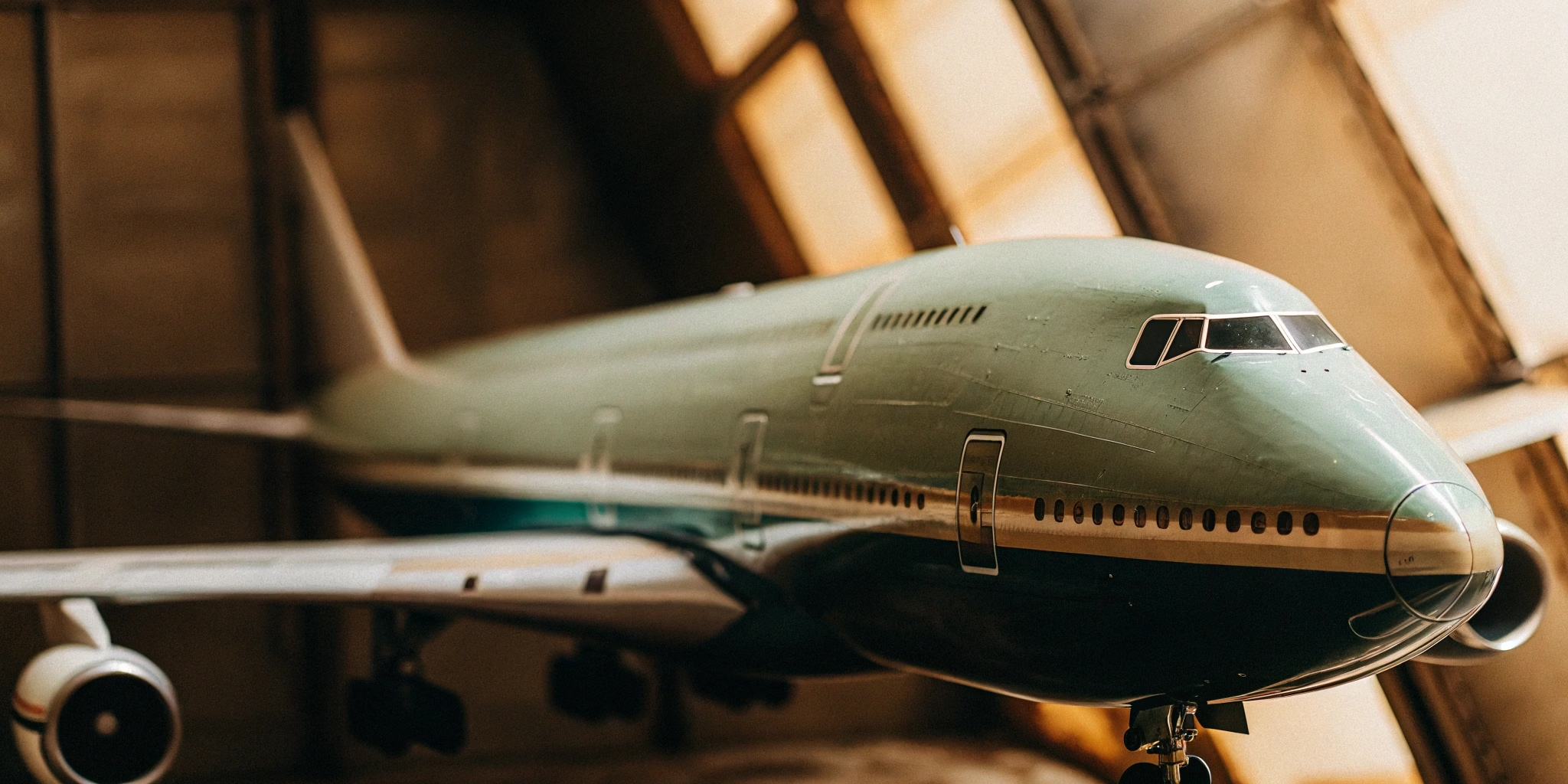
Payload: 134 tons | Volume: 858 m³ | Range: 8,130 km
The 747-8F is the largest commercial freighter Boeing produces. The nose door swings upward, creating an opening about 3 meters wide and 2.6 meters tall. This lets you load long equipment that would never fit through a side door.
Think turbine blades, steel beams, industrial piping. Anything measuring 10-15 meters long but narrow enough to fit the door width.
The main deck can handle up to 134 tons if weight distributes properly. Floor loading limits vary by zone, but the aircraft handles concentrated loads better than most passenger-to-freighter conversions.
Range covers most intercontinental routes without refueling. New York to anywhere in Europe. Los Angeles to Asia. Middle East to North America.
Best for: Large industrial equipment, long-haul bulk shipments, oversized cargo that needs nose loading.
Downsides: High charter costs ($200,000+ for long routes). Not every airport has equipment to load through the nose door. Limited availability means you need to book well in advance.
Antonov An-124
Payload: 120 tons | Volume: 1,050 m³ | Range: 4,800 km
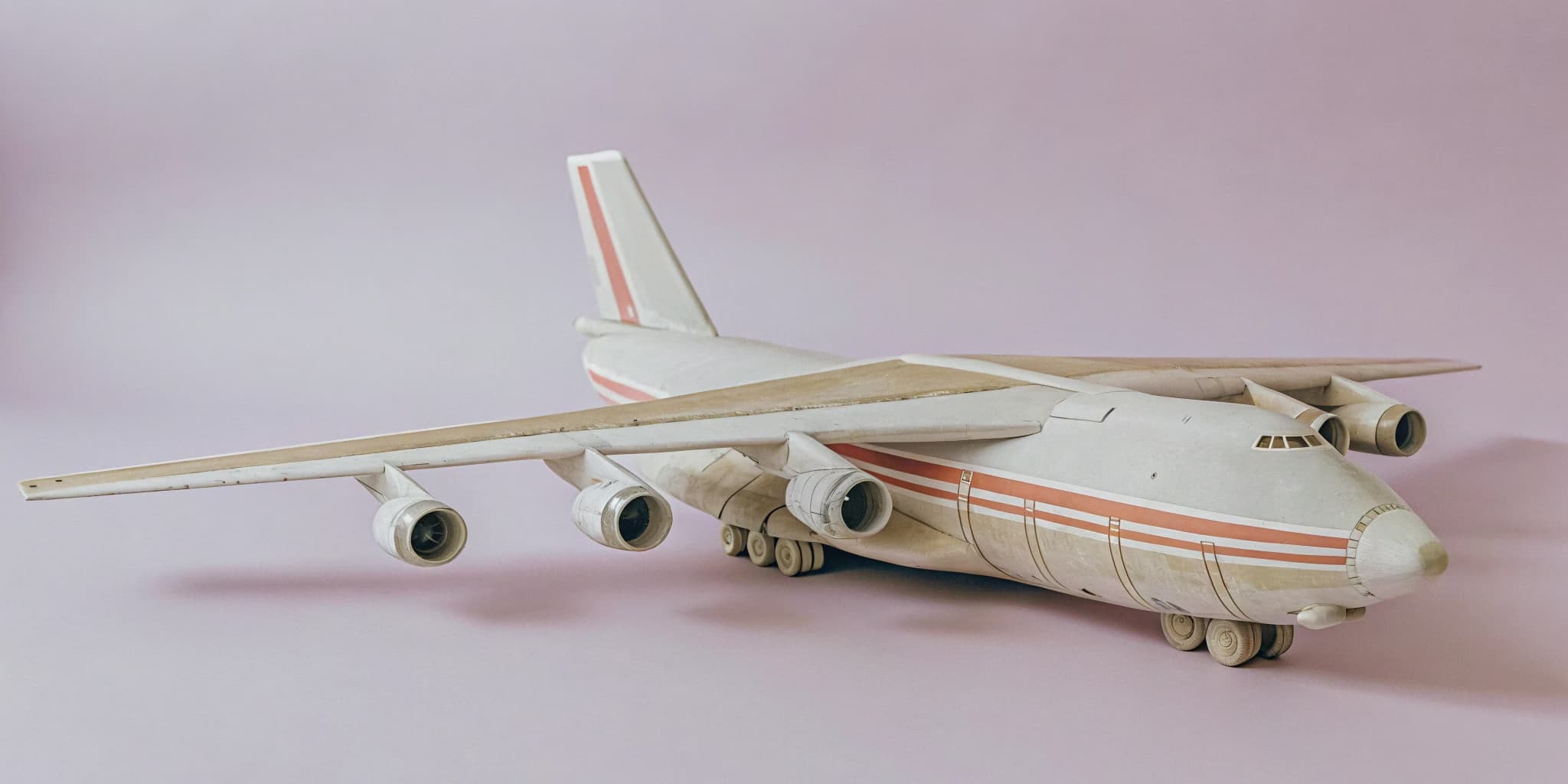
The An-124 was designed for military oversized cargo but works commercially for project freight. The rear ramp lowers to ground level, and the entire tail section can raise up for drive-on loading.
Floor loading capacity hits 1,200 kg/m² in reinforced zones. That's higher than any Western commercial freighter. You can pack dense machinery tighter and use more of the available space.
The cargo hold measures about 36 meters long, 6.4 meters wide, and 4.4 meters tall. Mining vehicles, construction equipment, and complete industrial systems all fit.
Range limits you to 4,800 km with maximum payload. Most intercontinental routes need a refueling stop. But for project cargo, this aircraft has no real competition.
Best for: Oversized machinery, mining equipment, project cargo, anything requiring drive-on capability.
Downsides: Very expensive to charter ($300,000-$500,000 for long routes). Limited number of aircraft available globally. Fewer airports can handle the size and weight. Often requires advance planning and special permits.
Boeing 777F
Payload: 102 tons | Volume: 653 m³ | Range: 9,070 km
The 777F offers the best fuel efficiency in the widebody freighter category. Modern engines cut operating costs compared to older designs, which translates to better charter rates for customers.
Maximum payload of 102 tons works for most industrial bulk cargo. Floor strength handles concentrated loads reasonably well, though not as high as the An-124.
Range is the real advantage here. At 9,070 km, this aircraft reaches farther than the 747-8F on a full load. Routes that would require refueling in other freighters work non-stop in the 777F.
Side cargo door limits you to equipment under 3 meters in all dimensions. But for dense bulk cargo that breaks down into manageable pieces, this aircraft delivers the best economics.
Best for: Dense bulk cargo, cost-sensitive operations, long-range routes, industrial components that fit standard doors.
Downsides: No nose loading for oversized items. Slightly less total capacity than the 747-8F. Still expensive to charter but more economical than alternatives for standard bulk shipments.
Airbus A330-200F
Payload: 70 tons | Volume: 475 m³ | Range: 7,400 km
The A330-200F sits between heavy widebodies and medium freighters. Good range, decent capacity, and lower operating costs than larger aircraft.
Payload of 70 tons handles most medium bulk shipments. Industrial machinery, construction materials, agricultural equipment. Anything in the 30-70 ton range where a 777F would be overkill.
Range at 7,400 km covers regional-to-intercontinental routes. Europe to Middle East. Asia to Australia. North America coast-to-coast with margin.
The aircraft uses less fuel than larger freighters, which helps keep costs down. Charter rates run lower than 747 or 777 options while still offering substantial capacity.
Best for: Medium bulk shipments, regional-to-intercontinental routes, cost-effective operations for 30-70 ton cargo.
Downsides: Less capacity than heavy widebodies. Side door only, no oversized loading. Limited availability compared to Boeing freighters in some markets.
Boeing 767-300F
Payload: 52 tons | Volume: 438 m³ | Range: 6,025 km
The workhorse of regional bulk freight. Reliable, widely available, and economical for moderate cargo loads.
Maximum payload of 52 tons handles industrial parts, agricultural equipment, construction materials, and machinery components. Perfect for shipments in the 20-50 ton range.
Range at 6,025 km works for most regional routes. Within North America, within Europe, within Asia. Intercontinental routes usually need refueling stops.
Operating costs run lower than widebody freighters. Charter rates reflect this, making the 767-300F the most economical choice for bulk cargo that fits its capacity limits.
The aircraft operates from shorter runways than heavy freighters. Opens up more airport options, especially in secondary cities where bulk cargo often originates or delivers.
Best for: Regional bulk networks, moderate-weight cargo, cost-conscious operations, destinations with shorter runways.
Downsides: Limited range for intercontinental work. Lower payload than widebody options. Can't handle oversized cargo.
Ilyushin Il-76
Payload: 50 tons | Volume: 400 m³ | Range: 4,200 km
Soviet-designed cargo aircraft built for operations in harsh conditions. Rear ramp loading and rough field capability make it unique.
The aircraft can land on unpaved runways, gravel, even packed dirt if needed. Landing gear is designed for poor surface conditions that would damage Western freighters.
Payload of 50 tons works for humanitarian relief, remote construction projects, and operations where infrastructure is limited or damaged.
The rear ramp lets you drive vehicles and equipment straight in. Ground-level loading speeds up turnaround time, which matters for disaster relief where every minute counts.
Best for: Remote locations, humanitarian relief, challenging environments, rough field operations.
Downsides: Limited range at 4,200 km. Older engines burn more fuel than modern designs. Less comfortable for crews on long flights. Maintenance can be complicated outside former Soviet countries.
Aircraft Comparison Table
| Aircraft | Payload (tons) | Volume (m³) | Range (km) | Door Type | Best Use Case |
|---|---|---|---|---|---|
| Boeing 747-8F | 134 | 858 | 8,130 | Nose door | Oversized bulk, long-haul |
| Antonov An-124 | 120 | 1,050 | 4,800 | Rear ramp | Project cargo, extreme dimensions |
| Boeing 777F | 102 | 653 | 9,070 | Side door | Dense cargo, fuel efficiency |
| Airbus A330-200F | 70 | 475 | 7,400 | Side door | Medium bulk, flexible routes |
| Boeing 767-300F | 52 | 438 | 6,025 | Side door | Regional bulk networks |
| Ilyushin Il-76 | 50 | 400 | 4,200 | Rear ramp | Remote ops, rough fields |
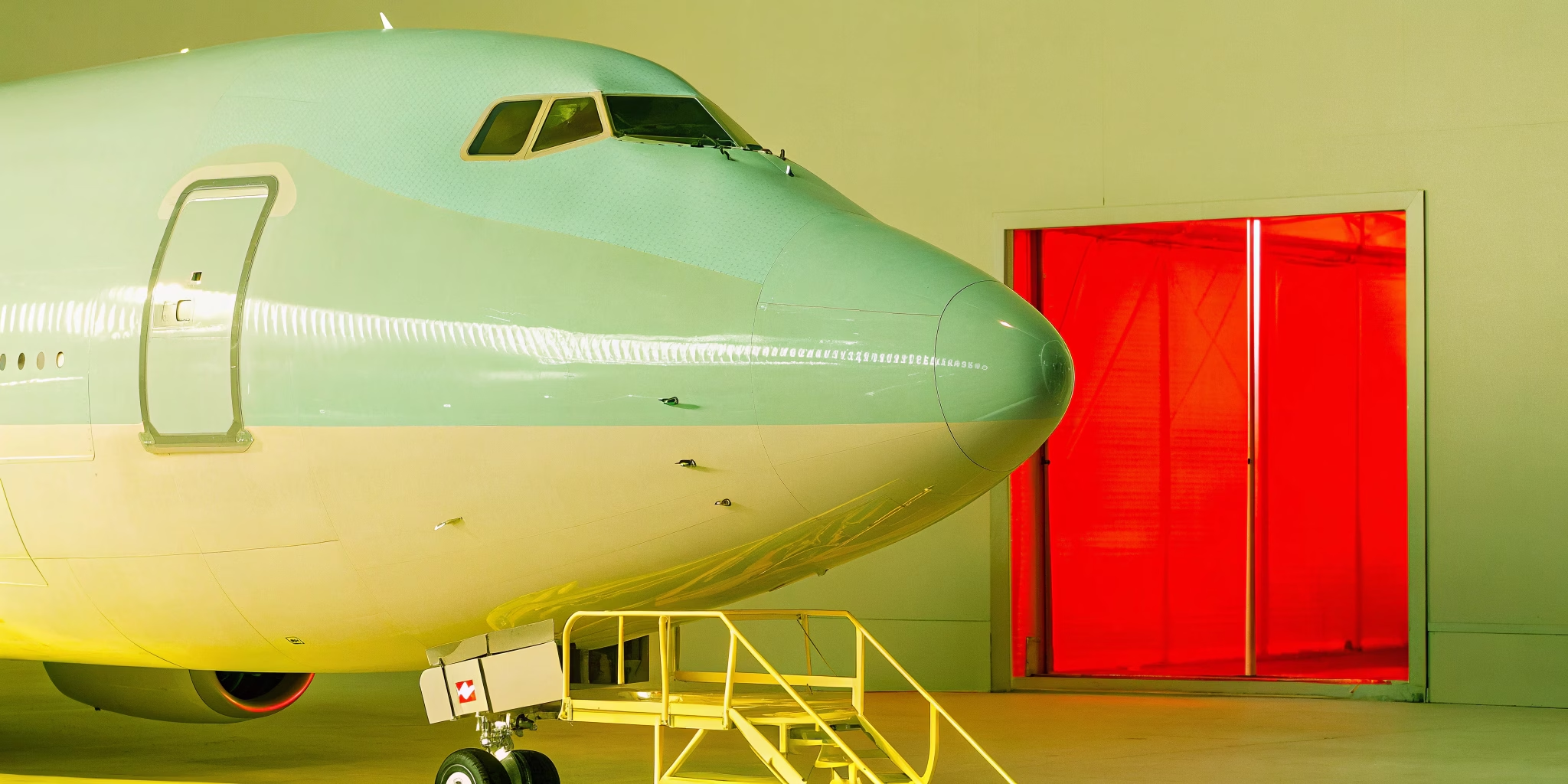
How bulk cargo gets loaded onto aircraft
Getting bulk commodities into a cargo plane takes planning and specialized equipment. The process varies depending on aircraft type and cargo characteristics.
Load planning & weight distribution
Ground crews use load planning software to calculate exactly where each piece of cargo sits inside the aircraft. This isn't optional. Weight distribution directly affects flight safety.
Too much weight toward the nose makes the plane harder to control during takeoff. The pilots have to fight to keep the nose up, burning extra fuel and risking control problems.
Too much weight in the tail creates the opposite problem. The aircraft wants to tip backward on the ground. During flight, it becomes tail-heavy and harder to maneuver.
The software calculates center of gravity based on each cargo piece's weight and position. Then it determines where to place items to keep the aircraft balanced within safe limits.
Floor loading limits add another layer of complexity. Each zone of the cargo hold has a maximum weight per square meter. A 10-ton turbine sitting on a 2-meter pallet creates concentrated floor pressure. The software ensures this doesn't exceed what the floor structure can handle.
For complex bulk shipments with multiple heavy pieces, load planning can take hours. But getting it right prevents dangerous flight conditions and potential structural damage to the aircraft.
Loading equipment & ground operations
High loaders
These are hydraulic platforms that raise cargo to the level of the aircraft door. The platform extends into the cargo hold, allowing workers to push or pull equipment inside.
High loaders cost $500,000 to $2 million depending on capacity and features. Major cargo airports have them. Smaller regional airports often don't.
Operating a high loader around aircraft requires training. Position it wrong and you damage the plane or the cargo. Most charter companies specify minimum crew qualifications for this reason.
Cranes
Heavy pieces need mobile cranes to lift them from ground level into the aircraft. A 15-ton turbine can't be manhandled onto a high loader. You need crane capacity rated well above the cargo weight for safety margin.
The crane operator needs to work carefully around the aircraft. Modern cargo planes have sensitive skin that dents or tears easily. One mistake costs hundreds of thousands in repair delays.
Not every airport has cranes available. Some locations require you to bring your own, adding to the cost and complexity of the operation.
Drive-on equipment
Aircraft with rear ramps allow forklifts and wheeled equipment to drive straight in. This speeds loading significantly for cargo that can move under its own power or on pallets.
The Il-76 and An-124 are designed for this. Military cargo planes use it all the time for vehicles and equipment. Commercial bulk cargo benefits from faster ground times and lower handling costs.
Securing bulk cargo
Once cargo is positioned correctly, it has to be secured to prevent movement during flight. Turbulence, takeoff acceleration, and landing deceleration all create forces that can shift unsecured cargo.
Aircraft cargo holds have tie-down points built into the floor. These are reinforced attachment points rated for specific load limits. Straps, nets, and chains connect from these points to the cargo.
The number and positioning of tie-downs depends on cargo weight and dimensions. A 5-ton piece might need 8-10 attachment points to keep it stable through all flight phases.
Fragile or irregularly shaped cargo needs extra attention. Custom padding prevents damage from contact with the aircraft structure or other cargo pieces. Spacers keep items from shifting into each other.
For extremely valuable or sensitive bulk cargo, some companies use custom cradles or frames built specifically for air transport. These distribute load properly, provide tie-down points, and protect the cargo throughout the journey.
Cost realities of bulk air freight
Understanding what drives bulk air freight costs helps you make better decisions about when to use it and which aircraft to choose.
Charter flights vs scheduled freighters
Charter costs
Chartering a cargo aircraft means you rent the entire plane for your shipment. Costs run from $50,000 to $400,000 depending on aircraft type, distance, and timing.
A 767-300F charter for a 5-hour regional flight might cost $75,000 to $100,000. A 747-8F for a 12-hour intercontinental route could hit $300,000 to $400,000. An An-124 for project cargo regularly exceeds $500,000 for long distances.
Charter gives you complete control over timing and routing. The plane goes when you need it, where you need it. For time-critical bulk cargo, this control is worth the premium.
Scheduled freight
Some cargo airlines run scheduled freighter routes that accept bulk commodities if they fit the aircraft and don't exceed weight limits.
Costs are lower than charter because you're sharing the plane with other cargo. But you lose flexibility. The plane flies on its schedule, not yours. Routes are fixed. And you compete with other shippers for space.
Scheduled freight works for bulk cargo that fits standard dimensions, doesn't require specialized handling, and has flexible timing. Industrial parts moving on regular routes between manufacturing hubs. Agricultural equipment shipping during off-peak seasons.
When to choose each
Use charter when:
- Cargo is oversized and won't fit scheduled freight
- Timing is critical and you can't wait for the next scheduled flight
- Destination isn't served by scheduled freighters
- Your shipment fills most of the aircraft capacity anyway
Use scheduled freight when:
- Cargo fits standard loading requirements
- You have time flexibility in delivery
- Cost savings matter more than timing
- Regular routes serve your origin and destination
What drives the cost
Fuel burn
Jet fuel is the single largest operating cost for cargo flights. A widebody freighter burns 10-15 tons of fuel per hour. At current fuel prices, that's $15,000 to $25,000 per hour just in fuel.
The aircraft burns the same fuel whether it's full or half empty. This is why bulk cargo that wastes space costs more per ton. That 8-ton turbine blade filling only 25% of the hold means the airline still burns fuel for the entire plane.
Newer aircraft like the 777F burn 20-30% less fuel than older designs. This efficiency gets built into pricing, making modern freighters more economical for long routes.
Crew and operating expenses
Cargo flights require at least two pilots, sometimes three for long routes. Plus ground crew, maintenance personnel, and operations staff. Labor costs add $10,000 to $20,000 per flight depending on duration and crew requirements.
Insurance, maintenance reserves, and aircraft lease or ownership costs add more. A 747-8F might carry $5,000 per hour in fixed costs regardless of cargo.
Airport fees and handling charges
Landing fees vary by airport and aircraft weight. A heavy freighter landing at a major cargo hub pays $5,000 to $15,000 per landing.
Parking fees apply if the aircraft sits on the ground for extended periods. Cargo hubs charge less because they want the business. Smaller airports charge more because they see fewer cargo flights.
Handling charges cover ground equipment, labor, and facility use. Loading bulk cargo takes longer than standard freight, so handling costs run higher. Figure $2,000 to $10,000 depending on cargo complexity and airport location.
When air freight makes financial sense
The math is straightforward. Air freight costs more than ocean shipping, so it only makes sense when the alternative costs even more.
Factory downtime
A manufacturing plant losing $100,000 per day in production while waiting for a replacement part will happily pay $150,000 to fly it in overnight. Three weeks on a ship means $2.1 million in losses. The air freight premium saves $1.95 million.
Construction penalties
Infrastructure projects often include penalty clauses for missing deadlines. If late delivery of critical equipment triggers a $200,000 penalty, paying $175,000 to charter a plane avoids the larger loss.
Emergency replacements
Oil rigs, power plants, and critical infrastructure can't wait for normal shipping. An offshore drilling platform shut down costs millions per day. Flying in a $50,000 part for $100,000 in freight costs is cheap compared to continued downtime.
Perishable value
Some cargo loses value over time. Flowers that ship by sea arrive wilted and worthless. Flying them overnight preserves the full value even though shipping costs more than the ocean alternative.
The decision comes down to comparing total costs including delays, penalties, downtime, and lost value against the air freight premium.
Bulk air freight vs ocean freight
| Factor | Air freight | Ocean freight |
|---|---|---|
| Transit time | 1-3 days | 2-6 weeks |
| Cost | $50,000-$400,000 per shipment | $5,000-$20,000 per shipment |
| Best For | Time-critical, high-value | Cost-sensitive, planned shipments |
| Risk | Lower transit time = less exposure | Weather delays, longer exposure |
| Capacity | Limited by aircraft size | Much larger volumes possible |
| When to Use | Factory downtime, emergencies, remote access | Planned projects, non-urgent bulk |
Transit time comparison
Air freight delivers in 1-3 days for most routes. Order equipment today, receive it this week. Critical for emergency replacements or time-sensitive projects.
Ocean freight takes 2-6 weeks depending on route and port congestion. Durban to Shanghai runs about 3 weeks. Casablanca to New York can hit 4 weeks. Add customs clearance and inland transport, and total delivery time extends further.
Cost trade-offs
Ocean freight costs 5-10% of air freight for the same cargo. A 20-ton shipment might run $5,000 by sea versus $75,000 by air.
But this assumes time doesn't matter. When delays cost money, the air freight premium becomes an investment that saves larger losses elsewhere.
Risk factors
Shorter air transit means less exposure to damage, theft, or loss. Cargo spends hours in transit instead of weeks. Fewer handling points reduce damage risk.
Ocean freight exposes cargo to weather, rough seas, and multiple transfers between ship, truck, and rail. Insurance costs reflect this higher risk.
Ideal scenarios for each mode
Choose air when:
- Time is critical
- Cargo value justifies premium shipping
- Delays cost more than air freight
- Destination is remote or hard to reach by sea
- Project deadlines can't slip
Choose ocean when:
- You have weeks of lead time
- Cost matters more than speed
- Cargo volume exceeds what aircraft can handle economically
- Regular shipping routes serve your locations well
- No urgent time pressure exists
FAQs
What is the largest cargo aircraft for bulk commodities?
The Antonov An-225 was the largest, but it was destroyed in 2022. Currently, the Antonov An-124 and Boeing 747-8F are the largest commercially available cargo aircraft for bulk commodities. The An-124 offers the most cargo volume at 1,050 m³ and handles oversized freight better. The 747-8F carries slightly more payload at 134 tons.
Can bulk cargo be shipped loose in a cargo plane?
No. Everything must be secured to prevent shifting during flight. Bulk cargo uses pallets, custom frames, or specialized containers depending on the item. Tie-down straps, nets, and chains connect cargo to reinforced floor points. Unsecured cargo creates safety hazards during takeoff, turbulence, and landing.
What's the maximum weight a cargo plane can carry?
It varies by model. Boeing 747-8F carries up to 134 tons. Antonov An-124 handles 120 tons. Boeing 777F maxes at 102 tons. Smaller freighters like the 767-300F carry about 52 tons. Actual usable capacity is often less than maximum specs due to floor loading limits and weight distribution requirements.
Are most bulk cargo flights chartered or scheduled?
It depends on cargo characteristics. Oversized or time-critical bulk cargo usually requires charter flights because scheduled freighters can't accommodate the dimensions or timing. Standard bulk cargo that fits normal loading requirements often ships on scheduled freight routes at lower cost. Project cargo almost always needs charters.
Which aircraft is most cost-effective for bulk freight?
For long-haul efficiency, the Boeing 777F offers the best fuel economy and operating costs. For regional work, the 767-300F provides the lowest costs. For oversized cargo, you're limited to the An-124 or 747-8F regardless of cost. The most economical choice depends on your specific route, cargo dimensions, and timing requirements.
Conclusion
Choosing the right cargo aircraft for bulk commodities comes down to matching your shipment's requirements to each plane's capabilities.
For oversized or project cargo, you need an Antonov An-124 or Boeing 747-8F with nose door access. Nothing else handles equipment that exceeds 3 meters in any dimension.
For long-haul efficiency, the Boeing 777F delivers the best fuel economy and range. It works well for dense bulk cargo that fits standard doors and needs to travel intercontinental distances.
For regional bulk freight, the Boeing 767-300F offers the most economical option. Lower operating costs and shorter runway requirements open up more airport choices.
For remote operations or rough field access, the Ilyushin Il-76 remains the only real choice. It lands where other cargo aircraft can't operate.
Get the aircraft selection right and your bulk cargo moves efficiently at reasonable cost. Get it wrong and your shipment sits on the ground while you scramble for alternatives or pay premium rates to fix the mistake.
The key is understanding your cargo's specific requirements before you start shopping for aircraft. Measure dimensions accurately. Know the weight. Identify any special handling needs. Check airport capabilities at both ends of the route.
Then match those requirements to the aircraft that can actually deliver what you need.
Work with Herve Wabo
Moving bulk commodities by air requires specialized expertise. I handle charter coordination, aircraft selection, load planning, and ground operations for complex cargo shipments.
With deep experience across mining, industrial machinery, and project cargo, I understand the critical nature of factory downtime and construction deadlines. I design logistics solutions that protect your bottom line.
If you're looking for a logistics partner who understands the technical nuances of bulk air freight, get in touch with me. I'm available for payload assessments, aircraft recommendations, and routing optimization projects.